
Keynote Speakers

Prof. José M. Goicolea
Universidad Politécnica de Madrid (UPM), Spain
Dynamics of Railway Bridges: Research, Methods and Engineering Codes
Professor Emeritus of Structural Engineering at the School of Civil Engineering, Universidad Politécnica de Madrid, where he formerly headed the Department of Continuum Mechanics and Structures. His research on high-speed railway bridge dynamics has shaped European design practice — he developed the CALDINTAV software for dynamic bridge analysis and contributed to the development of Eurocode EN 1991-2. He holds a PhD from the University of London (King's College) and has authored over 80 publications and supervised 25 doctoral theses over a career spanning more than three decades.
His keynote reviews key aspects of railway bridge dynamics — from the nature of moving loads and vehicle-bridge interaction to vertical and lateral dynamic response — examining existing bridge infrastructure in Europe, the research performed, contributions to the Eurocodes, and future prospects for high-speed railway design.
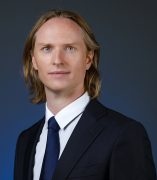
Prof. Sybil Derrible
University of Illinois Chicago, USA
Systems-Level Resilience and Economic Impacts of High-Speed Railway
Professor of Civil, Materials, and Environmental Engineering at the University of Illinois Chicago, where he directs the Complex and Sustainable Urban Networks (CSUN) Laboratory. Recipient of an NSF CAREER Award (2016) and the ASCE Walter L. Huber Research Prize (2023), he was elected Fellow of the American Society of Civil Engineers (2025), and he served as Lead Author on the United Nations Environmental Program (UNEP) GEO-7 report. His books include Urban Engineering for Sustainability (MIT Press, 2019) and The Infrastructure Book (Prometheus Books, 2025). He is ranked in the top 2% of globally cited researchers by the Stanford–Elsevier database.
His keynote examines how large-scale rail investments reshape regional economies and urban systems, drawing on his published research on infrastructure in the world.

Assoc. Prof. Thong Pham
Adelaide University, Australia; Head of AMIS-HSR Research Group, UTT, Vietnam
Meta-structures for Resilient Infrastructure: From Sacrificial Meta-Panels to Vibration-Controlled Metaconcrete
Associate Professor and Enterprise Fellow in Structural Engineering at Adelaide University. He leads the AMIS-HSR Research Group at the University of Transport Technology, Vietnam, connecting Australian research capacity with Vietnam's railway development needs. In 2025, he received the IIFC Distinguished Young Researcher Award — the ninth recipient of this honour since its inception in 2006. He secured various Australian Research Council (ARC) grants, and is currently leading a Linkage Project, serves as Associate Editor of Innovative Infrastructure Solutions, and is ranked among the top 2% of globally cited researchers (Stanford–Elsevier, since 2020).
His keynote presents metamaterials with properties unattainable in natural materials, enabling unprecedented control of stress waves and dynamic structural responses. Two complementary applications are developed: meta-panels as sacrificial systems to protect critical facilities such as metro stations by attenuating blast and impact energy, and metaconcrete integrating engineered resonant inclusions to suppress vibration in railway infrastructure — offering a transformative pathway towards resilient, adaptive, and multi-hazard-resistant infrastructure.
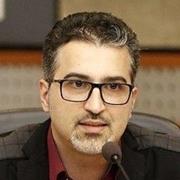
Assoc. Prof. Saeed Banihashemi
University of Technology Sydney, Australia
BIM, Digital Twins and AI for Mega-Infrastructure Lifecycle Management
Associate Professor in the School of Built Environment at the University of Technology Sydney, where he leads the Digital Disruptions in Built Environment research group. His work focuses on integrating BIM, Digital Twin, AI, and extended reality (AR/VR/MR) to enhance decision-making across the full lifecycle of infrastructure assets — from design and construction to operation and maintenance.
His keynote explores the integration of BIM, Digital Twin, and AI to create a data-driven infrastructure lifecycle ecosystem that supports predictive maintenance, operational optimisation, and intelligent decision-making for mega-infrastructure assets. It presents methodologies and frameworks for lifecycle delivery, real-time operations, and AI-enabled decision support, with applications to high-speed rail and other large-scale infrastructure systems.
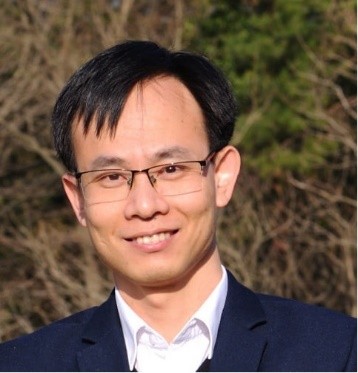
Assoc. Prof. Ho Si Lanh
University of Transport Technology, Vietnam
Green Cementitious Materials for Sustainable Infrastructure Development
Deputy Head of the Department of Geotechnical Engineering and Metro at the Faculty of Civil Engineering, University of Transport Technology. He earned his PhD from Hiroshima University in 2018 and continued there as an Assistant Professor from 2019 to 2022, building expertise in cementitious soil stabilisation through laboratory and field-scale research. His work focuses on cement-treated soils, geopolymer-stabilised laterite, and the reuse of industrial by-products in ground improvement — with over 2,900 citations and an h-index of 20.
His keynote presents experimental findings on cement and geopolymer-treated base materials for transport infrastructure, including low-carbon alternatives that incorporate fly ash and ground-granulated blast furnace slag — research with direct application to the earthworks and subgrade requirements of Vietnam's HSR corridor.
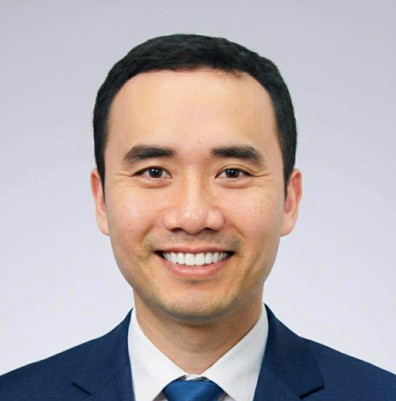
Dr. Khuong Le-Nguyen
University of Transport Technology, Vietnam; University of Canberra, Australia
Applications of Machine Learning, Generative Design, and Generative AI in High-Speed Railway Bridge Design
Senior Lecturer at the Faculty of Civil Engineering and Co-Head of the AMIS-HSR Research Group at the University of Transport Technology; Adjunct Professor at the University of Canberra, Australia. He holds a PhD from INSA Lyon (2015) and a Master's from École des Ponts ParisTech. Awarded the WIPO Medal for Inventors (2018), his research applies machine learning and finite element methods to structural design, and he developed the KD-Railway software for dynamic analysis of high-speed rail bridges.
His keynote explores how machine learning, generative design algorithms, and large language models can accelerate the design of high-speed railway bridges — from surrogate models that replace costly finite element simulations to AI-driven workflows that generate and evaluate structural alternatives, with demonstrations on bridge configurations relevant to the North-South HSR project.